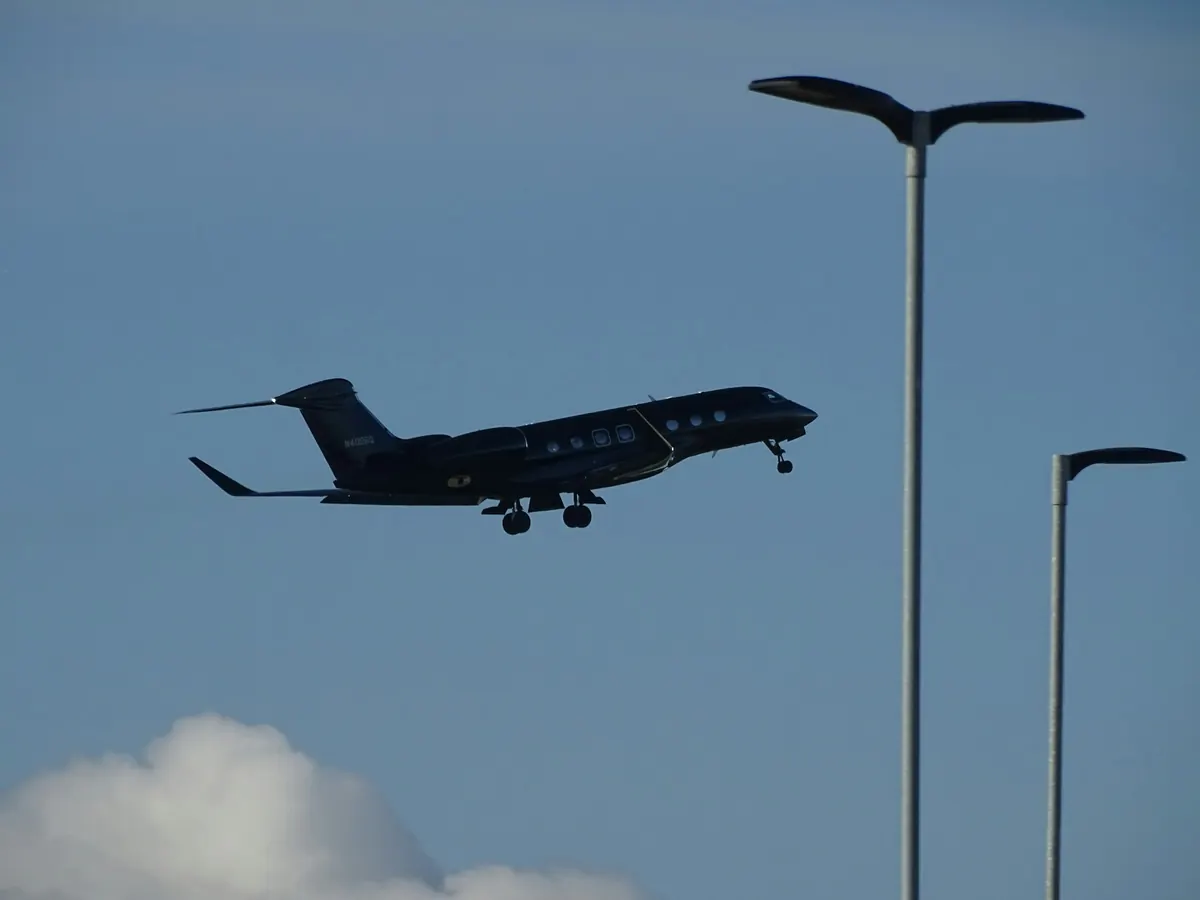
Ask three operators about the same flight and you may hear three different words for it. A scheduler talks about a deadhead, a maintenance manager about a ferry, a sales desk about an empty leg. All of them describe an aircraft moving from one airport to another with nobody paying to be on board. For a traveller, the vocabulary matters less than the conditions attached to the flight, but the words do hint at those conditions, so it is worth knowing what each one means.
One flight, several names
Deadhead is the oldest of the terms. Railways and airlines used it for moving crew or equipment without carrying revenue passengers, and charter operators still use it for any flight the aircraft makes empty. A deadhead is simply a fact of the schedule: the aircraft is here and needs to be there.
Ferry flight usually describes a non-revenue movement with a specific operational purpose: taking an aircraft to a maintenance facility, delivering it to a new owner, or bringing it home after a trip. Ferry flights are normally flown without passengers at all. When an operator decides to sell one, it stops being a ferry and becomes a charter.
Empty leg is the marketing term. It is what brokers and operators call a repositioning flight that has been put up for sale, usually at a reduced price. The name tells you the flight exists because of another trip, and that its timing and route were set by that other trip, not by you.
Repositioning flight (or positioning flight) is the neutral operational term, and the one you will most often see in a quote or a charter agreement. It covers both the empty flight to collect passengers and the empty flight home after dropping them off.
| Term | Where you hear it | What it usually means for you |
|---|---|---|
| Deadhead | Scheduling and crew planning | The aircraft is moving without passengers; the leg may or may not be offered for sale. |
| Ferry flight | Maintenance, delivery, return to base | A non-revenue movement. If it is sold, it is flown as a charter like any other. |
| Empty leg | Listings from brokers and operators | A repositioning flight offered at a reduced price, with a fixed route and a narrow time window. |
| Repositioning flight | Quotes and charter agreements | The neutral term for the same movement, used when the leg is part of your trip's cost. |
| One-way charter | Quotes | A regular charter for a single direction, often priced to cover the aircraft's return. |
What changes when you book one
Once a repositioning flight is sold, it is no longer an empty movement. In the United States it is operated as a charter under Part 135 of the federal aviation regulations, by a certificated direct air carrier that keeps operational control of the aircraft, exactly as it would for any other charter. Outside the US the operator flies it under its own authority's equivalent rules. Your charter agreement is with that carrier, and the safety standards, crew requirements and insurance are the same as for a full-price trip.
What does change is the commercial arrangement. The operator was going to fly this leg anyway. Its fuel, crew time and landing fees are largely committed by the trip that created it, so any revenue is better than none. That is why discounts of roughly 25 to 75 percent against the equivalent one-way charter are common. The figure is an estimate: the real price depends on the aircraft, the route, how close the flight is to departure and whether the operator expects to sell the leg to someone else.
Why a normal one-way quote can look expensive
The other side of the same coin explains why regular one-way quotes sometimes surprise people. If you charter a jet based in New York to fly you one way to Palm Beach, the operator still has to bring the aircraft home. Unless it can find another trip for the return, the empty flight back is part of the cost of your trip, and the quote will reflect it, sometimes as a separate repositioning line and sometimes built into the price.
An empty leg flips that arithmetic. Someone else's trip has already paid for the aircraft to be out of position, and you are buying the flight that brings it back. The aircraft, crew and standards are the same. The difference is that you are fitting your plans to the aircraft's schedule rather than the other way round.
The conditions matter more than the name
Whatever an offer calls itself, read it for the conditions. Five questions cover most of what matters:
- Is the departure time fixed, or is there a window? Some legs can move by an hour or two; others are fixed by the crew's duty day.
- What happens if the original trip changes? If the paying customer moves or cancels, the repositioning flight may move or disappear. The agreement should say what happens to your booking.
- Can we add a stop or change the destination? Usually not without turning the flight into a regular charter, priced as one.
- Is the price all-in? On domestic US flights the 7.5% federal excise tax and the per-passenger segment fee apply, as do airport and handling charges. An all-in price shows them.
- Who is the operator, and what is the aircraft? You should know the operating carrier and aircraft type before you book, and you can ask which third-party audits, such as ARGUS, Wyvern or IS-BAO, apply.
Whole aircraft, not a seat
Unless an offer is explicitly sold per seat, an empty leg is a whole-aircraft charter. Your group has the cabin to itself, and the price is for the aircraft, not per person. That makes repositioning flights particularly good value for groups who can travel together on a fixed time, and less useful for a single traveller who needs to be somewhere at an exact hour.
How to use the vocabulary
When you talk to an advisor, the word you use does not matter. What helps is telling us the route you have in mind, the earliest and latest dates you could fly, how many people are travelling and how much give there is in your timing. With that we can look for any flight, whatever its name, that is already heading your way, and price a regular charter alongside so you can compare the saving against the flexibility it asks of you.
Repositioning flights are a good fit when you can be flexible by a day or so and travel one way. When the timing is fixed or the trip is a round trip, a regular charter is usually the more reliable choice, and we price both.